Children's heart surgery in Delhi
Closing a hole in the heart or repairing a heart condition, planned around your child's echo, with a parent with them throughout.

- India package
- From $4,600
- In hospital
- 8 days
- Time in India
- 21 days
Your time in India
About 21 days in Delhi, day by day
Plans leave time to recover so you fly home with your surgeon's sign-off, usually around day 18–21 after open surgery, or within about a week after a catheter closure, once your child's cardiologist signs off.
Arrive, echo, meet the teamDays 1–3
We meet you at the airport. Your child has an echo, blood tests and a check by the children's heart team and the anaesthetist, who go through the plan with you.
Procedure or surgeryDay 4
A catheter closure takes a few hours. Open surgery takes longer, and your child then goes to the children's heart intensive care unit.
Intensive care and wardDays 5–11
After open surgery, usually a few days in intensive care, then the ward. After a catheter closure, most children go home within a day or two.
Recover where you're stayingDays 12–18
Rest, wound checks and clinic visits. After a catheter closure, families can often fly home sooner.
Final echo and fly homeDays 19–21
A final echo and check-up, your child's discharge summary and medicine plan, and the fit-to-fly letter.
Recovery care
Care after you leave hospital
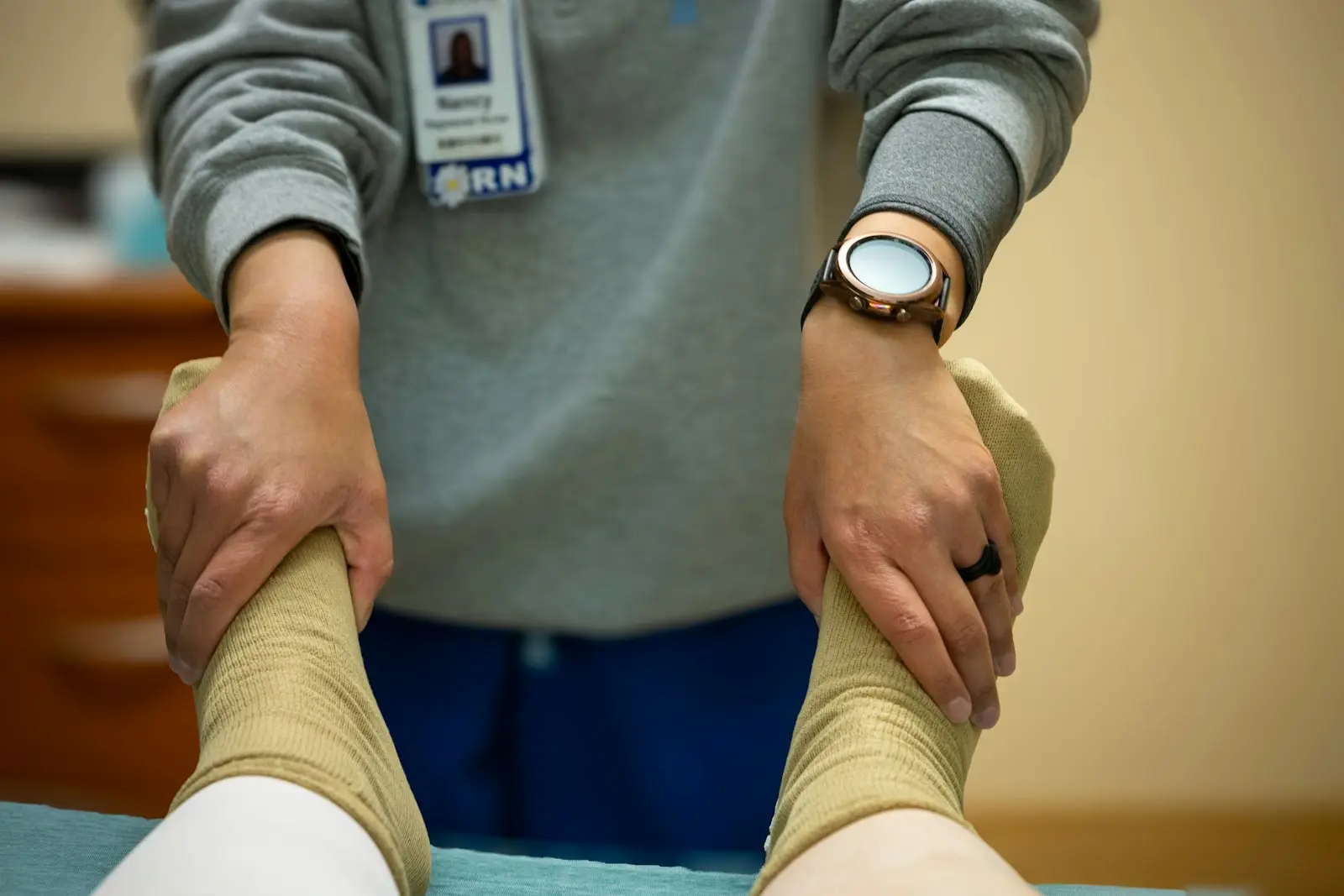
After discharge we arrange nursing and physiotherapy visits where you're staying, through vetted local partners, until your surgeon says you're ready to fly.
Day 1
Nurse visit
Wound check and fresh dressing
Daily
Physio in your room
Exercises set by your surgeon
As needed
Medicines delivered
Prescriptions collected for you
Before you fly
Fit-to-fly check
Back to your surgeon for sign-off
Home nursing visits
A qualified nurse checks your wound, changes dressings and watches for problems.
Physio where you're staying
Sessions in your hotel or apartment, following your surgeon's plan.
Medicines and supplies
Prescriptions, dressings and walking aids sorted for you.
One person to call
Your case manager co-ordinates everything and keeps your family updated.
Provided by vetted home-care and physiotherapy partners, and itemised in your written quote. Included in our Assisted and Premium plans, or added to Essential.
Ask what's includedIs this right for you?
Who it suits
Before you book anything, a surgeon at an accredited hospital reviews your records to confirm it's safe to travel.
Usually a good fit
- A hole in the heart (ASD or VSD) or an open PDA that your child's cardiologist says should be closed.
- Tetralogy of Fallot, or another condition where a planned repair has been advised.
- A recent echo report, ideally with the images, plus your child's age and weight.
- Treatment isn't available where you live, or the wait is long.
Wait, or get care at home
- A baby or child who is very unwell, turning blue or struggling to breathe. Get emergency care at home first.
- A chest infection, fever or other illness. Treatment is usually delayed until your child is well.
- A child their doctor at home thinks isn't well enough to fly.
Risks
What can go wrong, and what helps
Every operation has risks, wherever it's done. These are the main ones. Your surgeon will explain how they apply to you.
The main risks
Bleeding
During or after surgery, sometimes needing a return to theatre, or at the wrist or groin after a catheter procedure.
Irregular heartbeat
Common in the days after heart surgery and some catheter procedures, and usually treated in hospital.
Stroke
A serious but less common risk of heart surgery and procedures.
Infection
Of a surgical wound or graft site, or, rarely, around a stent, valve or closure device.
A clot or re-narrowing in a stent
The reason antiplatelet medicines matter after a stent. Stopping them early raises the risk.
Kidney or breathing problems
More likely in people who already have kidney or lung disease. The dye used in angiograms can strain the kidneys.
What a planned trip does about travel
- A written opinion first. A surgeon reviews your reports before you book anything, and can say no.
- Time to recover before flying. Plans include days in India after discharge, and you only fly with your surgeon's fit-to-fly letter.
- Clot prevention for the flight. Your surgeon advises on stockings, medicines and moving around. We can book aisle seats and wheelchair help.
- Records your doctor can use. Discharge summary, scans, operation notes and implant details in English, before you leave.
- Follow-up from home. We ask the hospital for video check-ups with your surgeon, and you have a named person to call if something worries you.
Questions to ask your child's heart team
- 1.Which approach do you recommend for me or my child (for example a stent or bypass, surgery or TAVR, a catheter closure or open repair), and why?
- 2.How many of these do you and your team do each year?
- 3.How long will the stay be in intensive care and in hospital?
- 4.What tests will show it's safe to fly?
- 5.What medicines will we go home on, for how long, and who adjusts them?
Print them with our pre-travel checklist, or read how to check a hospital and surgeon yourself.
The package
What's in the price
Prices depend on the plan the hospital proposes for your case. You get the hospital's itemised price in writing before you decide.
Travel, stay and our fee follow the same pattern as other trips: see the cost calculator for flights and accommodation. The treatment price itself comes from the hospital after it reviews your reports.
Usually included
- The procedure or operation: cardiologist or surgeon, anaesthetist and team.
- The closure device, for catheter procedures (your quote should name it).
- The days in children's heart intensive care and on the ward set out in the quote.
- Echo scans, X-rays and blood tests before and after.
- Medicines and nursing care in hospital.
Usually extra
- Extra intensive care days, or heart-lung support (ECMO), if recovery takes longer than planned.
- A further procedure, if one is needed.
- Your family's stay after discharge (we arrange it).
- Flights and travel insurance for you and your child.
Technique & technology
How it's done
What you can expect at large accredited hospitals in Delhi NCR. Your surgeon will explain which approach suits you.
Catheter closure, where it suits
Many ASDs and PDAs, and some VSDs, can be closed with a small device passed up a blood vessel from the groin, usually under general anaesthetic. There's no chest cut, and most children go home a day or two later. The echo shows whether the hole is the right size and in the right place.
Open repair
Holes that can't be closed with a device, and conditions such as tetralogy of Fallot, are repaired with open-heart surgery using a heart-lung machine. The surgeon explains what will be repaired and how.
Children's heart intensive care
After open surgery, children recover first in a paediatric cardiac intensive care unit with its own doctors and nurses, then move to the ward. Ask the hospital how parents can stay close during this time.
Where it's done
Hospitals that do this operation
Listed for reference. We request opinions from more than one where we can, and confirm in writing which hospitals we're working with for your case.
Fortis Escorts Heart Institute
Heart hospital offering children's heart care: paediatric cardiology and heart surgery.
Max Super Speciality Hospital
Children's heart team with a catheter lab equipped for children, device closure of ASDs and PDAs, and round-the-clock newborn and children's intensive care.
Medanta - The Medicity
Heart institute offering open-heart surgery for children, including operations for conditions that turn a baby blue (cyanotic heart disease).
Questions
Questions about children's heart surgery
What should we send first?
The most recent echo report and, if you can, the echo images or video. Also your child's age and weight, any letter from their cardiologist, recent ECG, chest X-ray, CT or MRI reports, their medicines and any past operations. We share them only with a hospital you agree to. The team then says whether a catheter closure or surgery looks likely and what it would cost.
Can we both come with our child?
Yes. Your child travels on a medical visa, and up to two family members can travel on medical attendant visas linked to it. Hospitals usually let one parent stay with the child on the ward; intensive care visiting rules vary. We find a place to stay near the hospital with room for all of you.
How is the price worked out?
Each child is quoted after the team reviews the echo, because the price depends on the condition, your child's age and weight, and how long they're likely to need intensive care. As a guide, Max Healthcare publishes starting prices for international patients of $4,600 for closing an ASD or VSD and $5,000 for repairs such as tetralogy of Fallot. Surgery for newborns and complex conditions costs more.
When can my child fly home?
Your child's cardiologist decides, after a final echo. After a catheter closure, many families can fly within about a week. After open surgery, plans allow about three weeks. Tell the airline in advance, as some ask for a medical form.
What happens once we're home?
You leave with the discharge summary, procedure or operation notes, echo reports and a medicine plan, all in English. Your child will need check-ups with a children's cardiologist at home, and many children with a repaired heart condition are followed up into adult life. We ask the hospital for video follow-ups, and you have a named person to contact if something worries you.
Planning this from abroad?
 United States
 United Kingdom
 Canada
 Australia
 Kenya
 Ethiopia
 Uganda
 Tanzania
 Mauritius
 Zimbabwe
 Botswana
 Nigeria
 Ghana
 DR Congo
 Cameroon
 UAE
 Oman
 Qatar
 Bahrain
 Kuwait
 Saudi Arabia
 Uzbekistan
 Kazakhstan
 Azerbaijan
Prices are planning ranges from published hospital packages across accredited hospitals in Delhi NCR and cost research (2025–26), not quotes. Day plans are typical; your surgeon sets the real dates. General information, not medical advice. Last reviewed October 2026.
Free case review
Get a quote for your children's heart surgery
Tell us what you need. We reply within one working day with next steps. Free, and no obligation.
- 1Tell us what you need
- 2Compare written quotes
- 3Decide in your own time